
Neurodiversity is about all of us. We as humans think differently to each other, not just because of differences in culture or life experience, but because our brains are “wired” differently.
Brain differences are normal, appear part of normal variation, and are absolutely necessary.
”Neurodiversity is the concept that brain differences are normal, and rather than deficits, appear as part of normal variation.” - Loren Snow
However, society is set up for the majority with a ‘one size fits all’ way of communicating, educating, and existing in the workplace. Which often excludes people who think, learn, process information and behave differently to the majority.
Neurotypical = “typical” or majority mind
Neurodivergent = “divergent” or minority mind
Neurodevelopmental conditions are often associated with neurodivergent minds.
Think Attention Deficit Hyperactivity Disorder (ADHD), Autism, Dyslexia, Dyspraxia, Dyscalculia, Dysgraphia, and Tourettes.
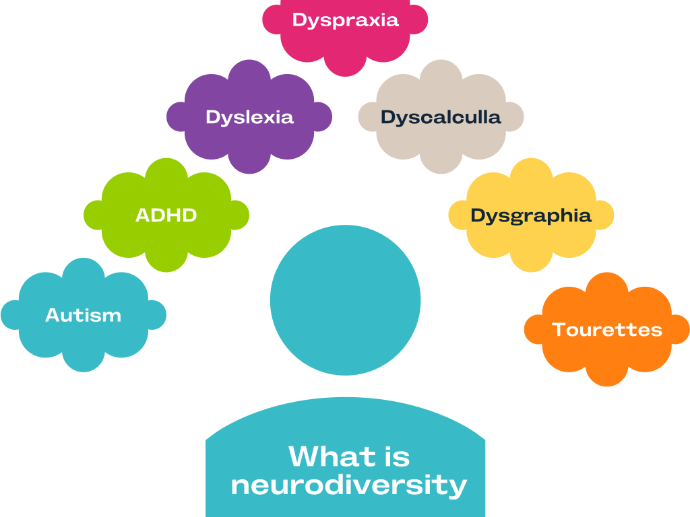
However this isn’t an exhaustive list. Any mind that processes information differently could fall under the neurodivergence umbrella.
Not everyone will have a formal diagnosis or access to assessment for any of the above diagnosis either.
The term neurodivergent is not a diagnosis label and therefore you will not get diagnosed as “neurodivergent” or “neurodiverse”.
We find that a lot of people now self-identify and self-describe as being neurodivergent. We also find that people might disclose being neurodivergent rather than disclose being autistic or ADHD. This is because being neurodivergent is:
generally viewed as positive
has less stigma and misunderstanding as other labels
there isn’t a diagnosis barrier
it’s a bigger group of people, bigger sense of tribe and connection
Please be aware that there is just as much diversity in neurodiversity as in everything else, across all genders, ages, ethnicities and cultures - with the same range of intelligence and abilities as everybody else has.

Loren Snow
My name is Loren Snow, and I'm an autistic consultant and trainer.
Over the past decade I've taught tens of thousands of parents of autistic children at every stage of the diagnosis process: from understanding EHCPs and other legal documents and reports, to understanding autism, learning how to connect with their children, to engaging with SALT, OTs, and all the other professionals.
I work with NHS England teaching NHS staff and in the NHS reviewing patients' care in psychiatric hospitals. In this work I have supported autistic adults in hundreds of NHS and private hospitals across the UK.
I'm also surrounded by other autistic adults just like me - so what better place to learn about autism than directly from an autistic person like myself who knows the autistic point of view, has heard the parent's side, and knows how the system works.
Our latest content
Check out what's new in our company !